

How to Grow Your Design Agency and Take Back Your Time

Growing an interior design business is daunting because hiring an interior designer to help with the workload means that there is another salary to be paid at the end of the month and with that comes the added pressure of bringing more money into the business. And let’s be honest, training new staff can feel like a never-ending nightmare! Furthermore, letting go and trusting others to do the work is actually a tricky thing for most interior designers to comprehend. Interior Designers tend to be perfectionists, they therefore feel that they will perform the various interior design activities better or faster than any staff member possibly could. The very idea of trusting a new staff member to correctly execute such detailed work (without your constant input or countless revisions) is extremely difficult for most interior design business owners to wrap their heads around.
And yet it can be done. The photo above is of my fantastic Jossi Design team and without each and every talented person in that photo I would have closed down the agency years ago. I was exhausted, frustrated and disheartened having spent years within the interior design industry, often hiring and training new staff, only to find myself still doing the majority of the work because I wasn’t training my designers correctly, or I just couldn’t let go and wanted to micromanage everything.
I considered myself an entrepreneur, and yet I had no free time to focus on the business. I also found it difficult to enjoy quality time with friends and family because I was thinking about my latest projects, or I was taking calls from clients informing me of the most recent problem that had developed on site. The business owner (the entrepreneur) is not meant to be conducting all day-to-day activities involved in the interior design agency, the business owner is meant to be looking at the bigger picture: the overall ‘look’ of the projects as well as cashflow, financial reports, marketing and strategizing for the future to ensure business success.
I want to see other interior designers achieve their business goals. Below are my four top tips for growing your interior design agency so that you have more time to focus on the important stuff:
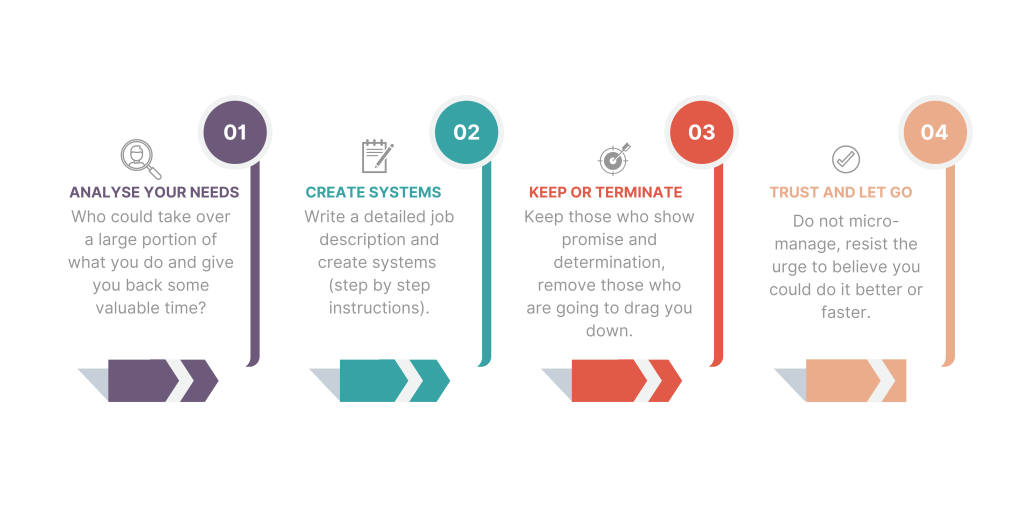
1. Analyse Your Needs
Step back and write down all of the day-to-day activities you would like to hand over to someone, thus freeing up some of your time. This will form the new employee’s job description and it will also reveal what role(s) needs to be filled within your company. Some examples of people you may consider hiring are: Junior Designer, Senior Designer, Office Manager, or a Marketing Manager.
In my experience, an organized and efficient office manager can be trained to handle all types of functions within an interior design agency such as obtaining quotes from suppliers, chasing contractors to address issues on site, producing costing sheets, liaising with various product reps, placing orders, arranging collection and deliveries, even providing constant feedback to your clients bringing them peace of mind that everything is under control. Meanwhile, a young, skilled and talented interior designer that is eager to learn can be molded to produce drawings, take over site inspections and handle projects the way you want them done.
2. Create Systems
Creating systems takes time and effort, but this is possibly the most important step as it will unlock the most amazing possibilities for you and your agency.
You will need to look critically at each task listed in the job description you have written and write step-by-step instructions on how you want them done. For instance, if your designer will be creating ceiling, lighting and electrical layouts for projects then you will need to write detailed instructions on how to start each drawing and what information must be included (e.g. elevations and sections, standard notes and legends, line weights, dimensions and revision numbers). The instructions should also explain what must happen with the drawing once it is completed such as checking accuracy, issuing for pricing or issuing for construction. I created templates for every drawing that the designer could possibly work on, which I then saved in a “templates” folder. Now you are ensuring that the designer has something to refer to and can easily check that they have completed the drawing to your standards. These systems and templates do not only apply to drawings, you can create systems for any tasks: finishes and fittings specification documents, dealing with clients, placing orders, or writing meeting agendas or minutes.
Finally, set aside time every week or two to have a training day and work through the systems with your team. We held “Training Fridays,” sitting around the boardroom table with muffins and biscuits and explaining why the various systems are important and what is expected of each member of the design team. It is important that your staff buy into the idea of working according to your systems as this allows them to take ownership of their respective roles within the company and it means they will not be bombarding you with endless questions (because they have the instructions to work with). They can also provide valuable feedback at these training sessions so you can adjust or update your systems as needed.
3. Keep or Terminate?
At the risk of sounding dramatic, getting stuck with inept staff can be deadly for your business. Keep the staff that impress you and quickly decide to terminate those who are showing no hope of getting it right. It is important to employ people who you believe could perform certain design or business tasks as good as (if not even better than) you, given the right training and guidance. However, it is usually hard to know whether your new designer will be able to adapt and perform tasks to your standard.
If you feel that a person is not capable of adding value to your team then it is important to make a decision to replace them, and you need to do this quickly. Getting stuck with a staff member who is not pulling their weight or cannot grasp what is required of them is going to mean you are constantly having to manage that person, and this is counterproductive. I am not advocating for you to infringe on any labour laws, so please do your own research here. I have found that initial short-term contracts are useful here, especially if the designer is still young and understands that they are still needing to gain experience with an agency. A three- or four-month contract means they can add this experience to their CVs, and you can monitor the designer’s progress during this time. At the end of this period, you can decide to either renew the contract on longer or permanent terms, or you could choose not to renew this contract and wish the person well.
4. Trust and Let Go
The final step is possibly the most difficult to put into motion: trusting your staff to follow the systems you have put in place and allowing them to make their own decisions based on the information at hand. You must remember that your staff are human, so they will possibly some mistakes, but humans learn from their mistakes (well hopefully!). If you only give your designer 3D renders and construction drawings to do because you are too scared to let them loose on site, they will only ever be CAD technicians. You must consider that this individual has studied interior design, and therefore has their own ambitions of growing with your company to eventually handle projects on their own with you as the founder, director, and the inspiration for the design agency. If you want to run a successful business that does not suck up your time and make you miserable, then this is also your goal!
As the business owner, it is your job to provide the correct foundation (the systems), to guide them when they are unsure, to point out when they have made a mistake and provide advice on how you would handle the situation. There will always be teething problems, and you might feel it would be better to go back to doing it yourself, but if you persevere you will never look back. You will be not only be responsible for creating an amazing agency that allows you time and freedom to focus on the important aspects of running a business, but for creating loyal and talented interior designers that your clients will be excited to work with.
Systems Will Change Everything
An entrepreneur is someone who starts and grows a business by hiring staff to perform the daily business functions while he or she runs the company. Being an entrepreneur is stressful as you are solely responsible for the success of the business, and this can be incredibly stressful. This is why being an entrepreneur has to come with some perks: being able to take holidays and travel, attend your kids’ sports days, and enjoy weekends and family time without constant calls from stressed out clients because your staff have it under control. This is only possible if you create systems and train your staff on how to use them, and then take a step back and allow them to run with it.
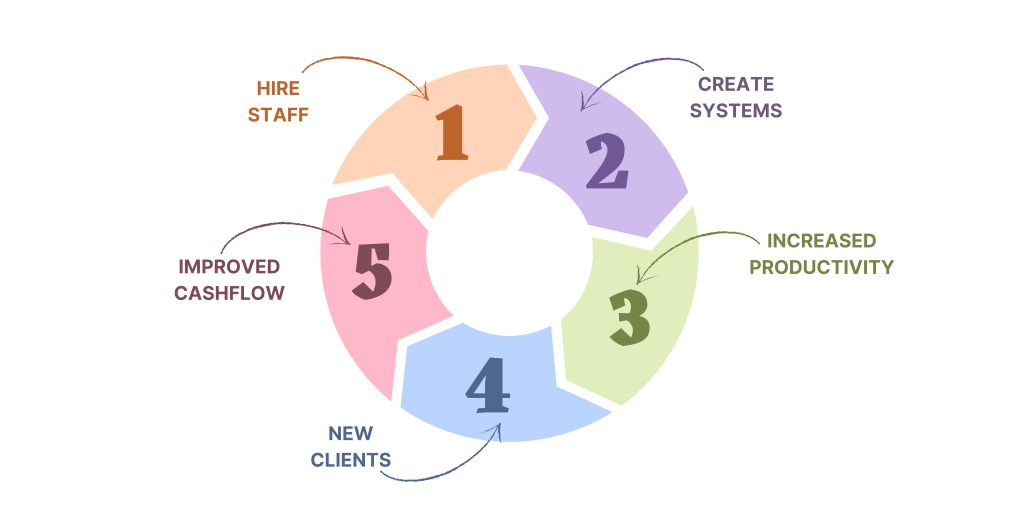
You will be amazed at how something as simple as introducing systems into your design agency can have an incredible impact on how clients (and potential clients) view your agency. You will find that tasks and projects are handled efficiently, your involvement in each aspect of the various projects will start to decrease while productivity actually increases. You and your team will be able to take on more projects, and as the entrepreneur you can start to focus your free time on strategizing, networking and marketing, all of which are essential for bringing in new clients. This means more money coming in to cover those additional salaries, and more profit left over for you: the entrepreneur.
 The True Profession of Interior Design
Leave a comment