

Understanding How Interior Design’s Public Image Impacts on its Practitioners.
Have you ever noticed that we tend to make assumptions about others based on their occupations? Social studies tell us that one of the most frequently asked questions when meeting someone new is, “What do you do?” Armed with this information, we then categorize the individual, making assumptions based on the prestige or status associated with their occupation.
An occupation with high prestige, such as being a doctor, often carries positive social recognition, which boosts the practitioner’s sense of self-esteem. Conversely, individuals in occupations perceived as low status may feel the need to distance themselves publicly from their profession.

As explored in a previous blog, Does Interior Design Have an Image Problem?, interior design has historically been associated with negative stereotypes, being seen as feminine, amateurish, and superficial. This led me to examine how this identity crisis impacts practitioners’ self-esteem. To fully understand this, I first needed to explore two key dimensions of self-esteem:
Self-efficacy: The belief in one’s effectiveness in achieving goals or meeting standards.
Self-worth: The feeling of being accepted and valued.
I also identified different identity bases that relate directly to these self-esteem outcomes:
Role-based Identity: We all assume roles tied to societal positions (e.g., spouse, parent, interior designer). Each role comes with expected behaviors and performance standards. When these roles are validated, we feel accomplished and competent, contributing to our self-efficacy.
Social Identity: When we identify with a particular group (e.g., “I am an interior designer”), we gain recognition and a sense of acceptance from other group members. This social integration enhances our sense of self-worth.
With this understanding, I set out to explore how public perceptions of interior design impact practitioners’ self-esteem, using Social Identity Theory (SIT) as my theoretical framework (for more information on SIT and interior design please read one of our previous blogs: Are You in the INGROUP?).

SIT suggests that when someone identifies as an interior designer, they categorize themselves as part of the “in-group.” This affiliation affirms their societal connection, influencing their sense of self-worth and value. These feelings then shape their role identity, which affects their sense of efficacy and, ultimately, their professional self-concept.
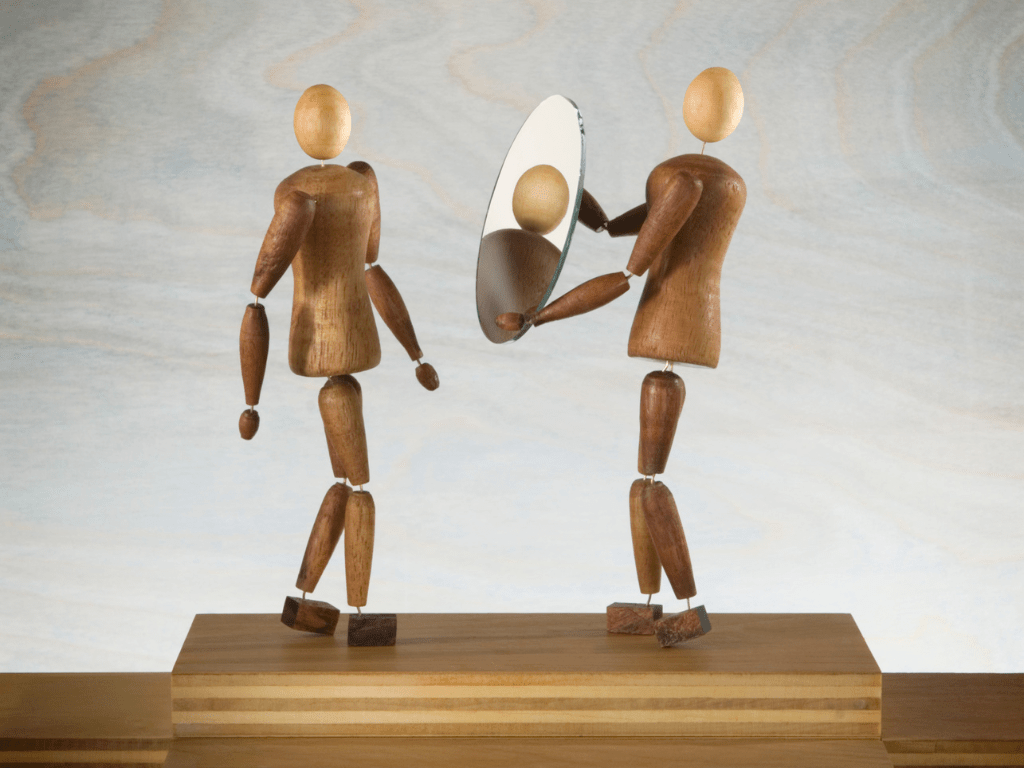
The research indicates that an occupation’s public image is heavily influenced by society’s appraisal of the group’s qualities and status. Therefore, the public’s perception of an occupation directly impacts practitioners’ self-worth, self-efficacy, and overall self-esteem. For interior designers, this means their self-esteem is closely tied to the public’s collective view of the profession.
I interviewed South African interior designers to gather firsthand experiences, analyzing their responses through the lens of SIT. The designers expressed frustration over a lack of professional respect from the general public, particularly when having to justify their fees. They felt that their skills, training, and expertise were often underestimated, which affected their self-esteem in the following ways:
Resentment stemming from the public’s underestimation of their education, skills, and experience.
Embarrassment due to the public misperception that interior design is a feminine occupation.
Frustration at constantly having to prove their intelligence and qualifications.

My research suggests that the South African public’s perception of interior design negatively impacts practitioners’ self-worth, self-efficacy, and, consequently, their self-esteem. However, this issue is not unique to South Africa. Studies show that interior design faces an identity crisis on a global scale. Despite efforts by scholars, practitioners, and professional organizations, a definitive resolution remains elusive.
The INGROUP blogs aim to raise awareness of this identity crisis and encourage practitioners to join the quest for professional recognition in the interior design field. Subscribe and follow the INGROUP as we work towards elevating the discipline.
References:
Acorn, S., Ratner, P. A. and Crawford, M. 1997. Decentralization as a determinant of autonomy, job satisfaction, and organizational commitment among nurse managers. Nursing Research, 46: 52-58.
Carll White, A. C. 2009. What’s in a name? Interior design and/or interior architecture: the discussion continues. Journal of Interior Design, 35(1): x-xviii.
Chaney, S. A. 2007. Interior design identity: A proposal to shift public perception with public relations strategies. Master of Fine Arts. Florida State University.
Clucas, C. 2020. Understanding self-respect and its relationship to self-esteem. Personality and Social Psychology Bulletin. 46(6): 839–855
Havenhand, L. K. 2004. A view from the margin: Interior design. Design Issues. 20(4): 32-42.
Jones, J. 2023. Exploring Professionalisation’s Ability to Resolve Interior Design’s Identity and Practice Frictions in South Africa. MTech. Durban University of Technology.
Karanikola, M., Doulougeri, K., Koutrouba, A., Giannakopoulou, M. and Papathanassoglou, E. D. E. 2018. A phenomenological investigation of the interplay among professional worth appraisal, self-esteem and self-perception in nurses: the revelation of an internal and external criteria system. Frontiers in Psychology, 9(1805):1-12.
Poorgholami, F., Ramezanli, S., Jahromi, M. K. and Jahromi, Z. B. 2016. Nursing students’ clinical performance and professional self-concept. Bangladesh Journal of Medical Science, 15(1): 57-61.
Rubin, M. and Hewstone, M. 1998. Social identity theory’s self-esteem hypothesis: A review and some suggestions for clarification. Personality and Social Psychology Review, 2: 40-62.
Stets, J. E. and Burke, P. J. 2000. Identity theory and social identity theory. Social Psychology Quarterly, 63(3): 224-237. Stets, J. E. and Burke, P. J. 2014. Self-esteem and identities. Sociological Perspectives, 57(4) 409– 433
Tajfel, H. and Turner, J. C. 2004. The social identity theory of intergroup behaviour. Political Psychology, January: 276 – 293
Ten Hoeve, Y., Jansen, G. and Roodbol, P. 2013. The nursing profession: public image, self-concept and professional identity: a discussion paper. The Journal of Advanced Nursing (JAN): Discussion Paper, 295-309
Ulfsdotter Eriksson, Y. and Linde, M. 2014. “Being” or “doing” a profession: work as a matter of social identity. The International Journal of Interdisciplinary Cultural Studies, 8(1): 33-43.

 The True Profession of Interior Design
Leave a comment